 The Leadership Responsibility Behind Building the Right Team
Are you setting the standards for your team?
Dan Sullivan, Author of Who Not How said, "Your success is determined by having the right team." But how do you know if your team is the right team? What makes them right? Is there a spectrum that tells you how effective they really are?
The answer is yes! Measuring team effectiveness can be difficult, but it is absolutely possible. This is why Key Performance Indicators (KPIs) matter.
In any project with defined timelines and budgets, it is critical that every single person involved is the right professional for their role. From the data analyst, to the developer, to QA, all the way to the executive sponsor.
I have managed projects my entire career, and I can tell you with a straight face that one weak link can derail the entire project or mission.
You must identify performance gaps as early as possible. Give them grace to improve, but also give them clear timelines to demonstrate that improvement.
In the meantime, start working on a mitigation plan because you should not underestimate early indicators.
In other words: Learn to identify and mitigate your risk early on in the project. Strong leadership protects the mission while still giving people the opportunity to rise to expectations.
Here are my early indicators that are non-negotiable:
1. Punctuality
Team members who consistently showed up on time, or early, are more likely to outperform those we have to ping with "Are you joining the meeting?" Pay attention when this behavior becomes consistent.
Coming from a military background, my personal rule is to arrive 15 minutes early to in-person meetings and 5 minutes early to virtual calls. It does not always work perfectly with back-to-back meetings, but it sets the standard for how I show up.
2. Professional Presence
I have seen it all. Tank tops, messy hair, and once even a robe and shower cap. Remote work is a privilege. If we do not treat it professionally, we ruin it for everyone else.
Not having a camera on doesn't earn trust from your colleagues either. How you show up communicates how seriously you take your work and your team.
Professional presence builds trust and respect. This is not negotiable.
3. Task Follow-Through
Life happens. We all understand that. But when you have to repeatedly ask about the same task, one that was agreed to and time-bound, trust begins to erode.
Here is what I have observed. Those you have to follow up with once, you will have to follow up with often. Those who hold themselves accountable stay on top of everything. Accountability is a a mindset, not an option.
All of these behaviors can be translated into KPIs by tracking how often they occur. Consider the following KPIs to determine the strength of individuals on your team:
- % late meeting attendance
- Task completion vs. committed deadlines
- % of deliverables completed on or before agreed deadline
- Ownership vs. dependency
- Self-reported updates
- Leader-requested updates
High leader follow-up = low ownership. Behavior is emotional, but it is also measurable and you cannot improve what you can't measure.
Building the right team isn't just about output. It's about culture, professionalism, and respect. When people join my team, they have to sign an "Expectations Management Policy" that outlines my expectation for professionalism that match the early indicators I outline above.
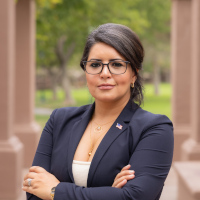
Asal Vox Gibson is an award-winning technology and cybersecurity executive and CEO of CyRoot. A Las Vegas Top Tech Award Winner, recipient of the Las Vegas Chamber MAC Chairman Award, and the first Nevada Executive Leadership graduate from the Society of Information Management, she is recognized for turning technology strategy into mission-driven results. She is also the founder of CyRoot Academy, a nonprofit empowering veterans and underserved communities to launch careers in cybersecurity and IT, and serves as an Honorary Commander at Creech Air Force Base.