 Should You Delete Your Social Media Before You Job Hunt
Here's what I told a student who asked
A student came to me recently with a question I hear more often than you’d think: Should I close my social media accounts? I’m worried potential employers will look me up and judge what they see.
It’s a fair concern. But my answer surprised her.
Your Social Media Is Part of Your Brand
Here’s what I told her: even your personal accounts—your Facebook, your Instagram—are part of your brand whether you intend them to be or not. The question isn’t whether to have a presence. It’s what you choose to do with it.
My only caveat is this: if something you post creates a vulnerability for you, it’s worth reconsidering. That’s less about social media itself and more about being intentional with what you share.
But deleting everything? That doesn’t necessarily protect you. It can leave an employer with nothing to go on but your resume—and in today’s world, that’s often not enough to build trust on its own.
What Are Employers Actually Looking For?
She asked me: What do you think employers are looking for when they look up applicants?
In my experience, they’re trying to understand who you are beyond what’s written on paper.
If your content is one-dimensional, it tells a limited story. But if I see a mix—family, friends, interests, community involvement, things you care about—that creates a more complete picture. And that context matters.
Would I Actually Hire Someone Based on This?
Her next question got right to the point: So would you hire someone who shows more of their life, then?
I don’t make hiring decisions based on social media alone. But what I see can reinforce—or raise questions about—the impression I already have from a resume or interview. In my experience, people who invest in life outside of work often bring stronger balance, perspective, and consistency into their roles. They tend to show up with more clarity about what matters and why.
Won’t They Think I’m Too Busy for the Job?
This is the one that stuck with me. She said: But I’m afraid they’ll think I have too much going on and won’t have time for the job.
That concern is understandable, but often backwards.
Many of the most effective people I’ve worked with have full lives: families, hobbies, causes, and communities they’re committed to. Those responsibilities don’t distract them—they often sharpen their discipline and time management.
Work Is Not the Whole Story
There’s a principle I come back to often: work can’t be your entire identity. It supports your life—but it shouldn’t replace it.
The people I’ve seen thrive long-term are the ones who understand that balance. They’ve built lives that give them energy, perspective, and purpose beyond their paycheck. And that shows up in how they work.
Man Shall Not Live By Bread Alone
There’s a verse that has stayed with me: Man shall not live by bread alone
(Matthew 4:4). For me, bread is not just food—it’s also the paycheck, the title, the job itself. Work is bread. It feeds you. But it can’t be all of you.
The people I want on my team are the ones who understand that. They’ve built a life that feeds more than just their bank account—and that shows up in how they treat people, how they handle pressure, and how they carry themselves online and offline. Those are the people who show up whole, not depleted.
My Advice
Don’t erase your story to look more employable. Build a life that reflects who you are—then be intentional about how you share it. When your story is consistent across your resume, your presence, and your interactions, trust starts forming before you ever walk into an interview.
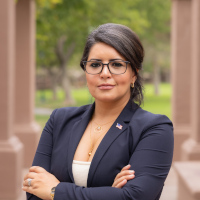
Asal Vox Gibson is an award-winning technology and cybersecurity executive and CEO of CyRoot. A Las Vegas Top Tech Award Winner, recipient of the Las Vegas Chamber MAC Chairman Award, and the first Nevada Executive Leadership graduate from the Society of Information Management, she is recognized for turning technology strategy into mission-driven results. She is also the founder of CyRoot Academy, a nonprofit empowering veterans and underserved communities to launch careers in cybersecurity and IT, and serves as an Honorary Commander at Creech Air Force Base.